
The agent writes the plan
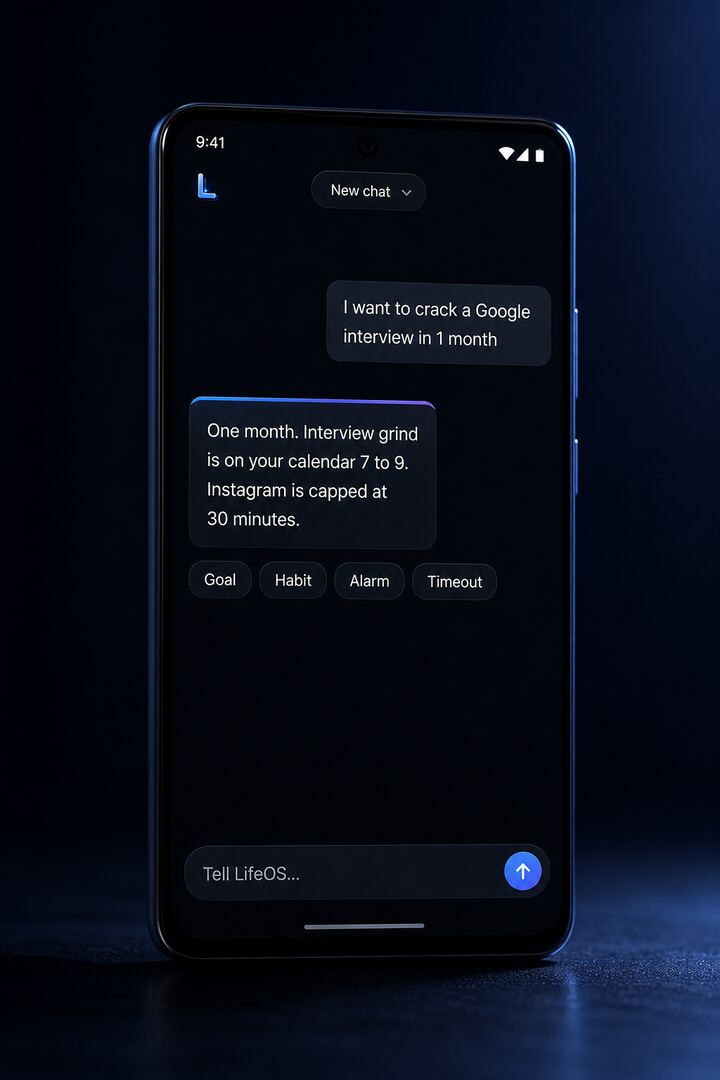
Chat is the start destination. One sentence becomes goals, tasks, habits, and blocks — in a Strict, Supportive, or Coach voice.
Tell LifeOS you want Google in a month. It writes the calendar, caps Instagram, sets the 7am alarm, and slams an overlay when you open Reels anyway. Other apps organize. This one executes.
A Zenbleed product · Android 14+ · Real alarms · Focus overlay · Local-first
A single turn returns the reply and the mutations: goal, habits, study blocks, timeouts, focus windows, memory. The dashboard fills in before you leave the chat.
Six surfaces. One agent. The phone is the enforcement layer.
Chat is the start destination. One sentence becomes goals, tasks, habits, and blocks — in a Strict, Supportive, or Coach voice.
Real AlarmClock schedules, full-screen wake-ups, and a spoken persona line. “LeetCode done? Don’t lie to me.”
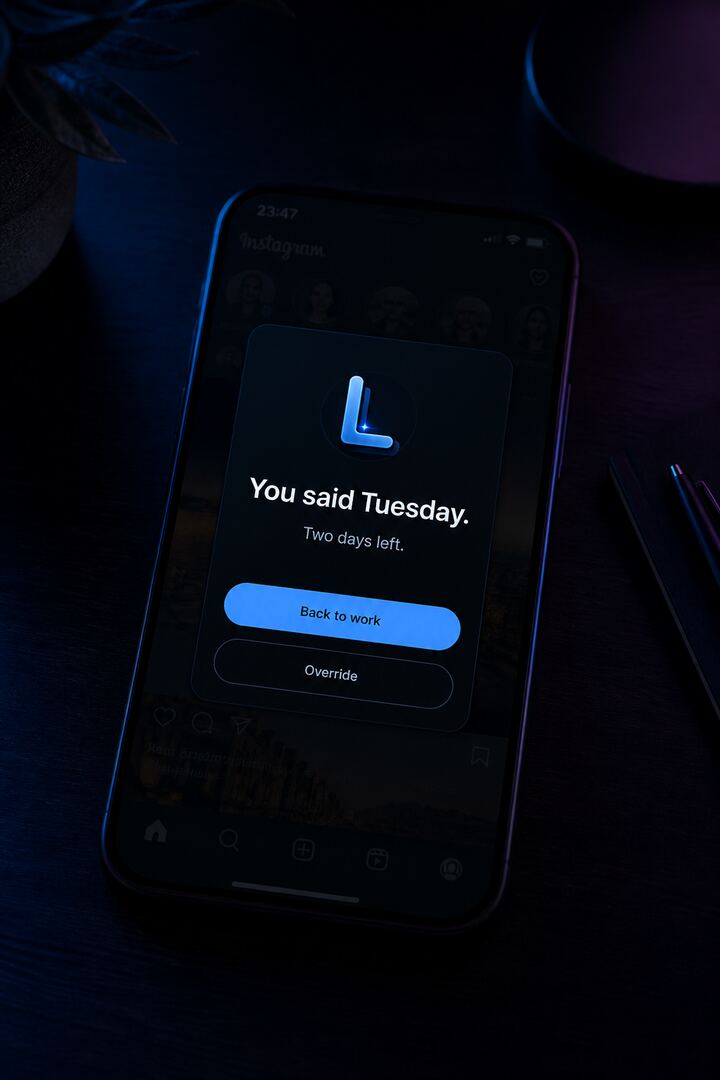
Open Instagram during a block and LifeOS draws over it. Back to work, or admit the override. Usage-stats, not accessibility theater.
Hard goals get a live risk ring from remaining work and time left. Today’s rail shows what is due — and the now line.
IMAP, contest mail, exam notices. LifeOS promotes what matters into tasks and events instead of leaving it in a badge count.
Facts, persona, and the compact life-state live on the device. The model sees a projection — not a surveillance dump.
The demo narrative is the product. Ninety seconds from sentence to overlay.
“DSA due Tuesday. I keep doomscrolling Instagram. Wake me at 7.” LifeOS answers in the persona you picked.
Goal, task, 07:00 alarm, Instagram timeout, blacklist focus. One mutate. Undo reverts the whole expansion.
Open Instagram and the overlay hits: “You said Tuesday. Two days left.” The alarm speaks the persona line out loud.
Switch voices anytime. The alarms and overlays stay. Only the tone changes.
Blunt. Terse. Holds the deadline.
“One month. Instagram is capped at 30 minutes. Don’t argue with me on day three.”
Warm. Encouraging. One slip is allowed.
“We’ll get the assignment in. I parked Instagram so tonight stays quiet.”
Energetic. Competitive. Work is training.
“Game film at 7. Caps are in. Show up for the Saturday mock.”
Exact alarms. Usage-stats polling. A system overlay. Optional network guard. The agent is not a chatbot with a todo plugin — it is the control plane for the device.
Invite-only Android APK. We onboard a few people at a time so enforcement permissions — alarms, usage access, overlay — can be walked through for real.
First 50 testers. No card. You get the build and a short setup.
We only email about the beta. Your phone stays yours.